
The Coliving Concept in the Belong Network
14 September 2021 · Report
14 September 2021 · Report
The Coliving Concept in the Belong Network
According to data from August 2020, the global population reached 7.8 billion, and by 2023 this number is expected to increase by 0.2 billion. As society grows, so does demand for residential real estate. The real estate market in Poland is expected to face increasing challenges related to property purchases – limited availability of apartments in attractive locations and stricter mortgage procedures. The needs of Generations Y and Z are also changing, as they increasingly value the benefits of sharing. Younger generations are less attached to one place permanently, and thanks to technological development, more and more people decide to change their workplace and place of residence frequently in line with their expectations and values. Coliving is a response to the current needs of Generations Y and Z. The ways in which the Coliving concept is implemented vary depending on the location and culture of a given country. This growing concept is becoming a global trend and responds to the needs of younger generations.
Coliving – what is it?
The term coliving is relatively new; the first references to it appeared in 2011 and 2012. The concept is described as a new typology of residential planning that is gaining popularity; a form of renting fully furnished apartments with access to extensive shared spaces, whose function is to create a community among residents.
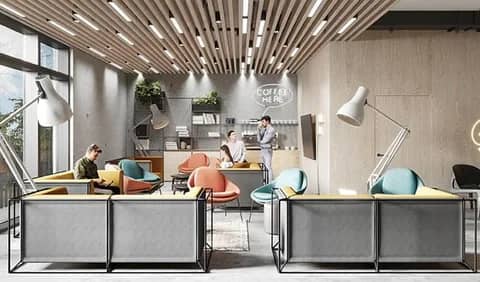
Coliving can be understood as a number of smaller residential units with larger shared areas located within a single building. All private and common spaces are properly arranged and furnished so that they fully serve their intended function – rest or spending time together. In addition, the coliving structure should include additional services, such as stay cleaning, technical support or a reception desk.
Within the building structure, the concept distinguishes three functional areas:
– Primary areas – shared spaces where residents integrate and spend their free time together,
– Secondary areas – shared areas with a functional purpose: corridors, staircases, laundry room, bicycle storage, etc.,
– Tertiary area – private spaces where residents meet their needs for safety and privacy.
Coliving is based on the value of building relationships between people, which is why the number and size of private areas is reduced in favor of common areas. Depending on the country, common areas take different forms and may include kitchens, shared lounge areas, libraries, workspaces or functional spaces such as laundry rooms and storage areas. Shared spaces are intended to create more opportunities for spontaneous meetings. In our view, Coliving is a response to the natural human need to live in a group while respecting individual identity and privacy.
Quality for young people
The architecture of the building and the interior design matter. One of the factors that supports successful social interaction is good-quality equipment, accessible and diverse common areas, and clearly separated private spaces. The most common layout for a building intended for coliving places secondary common areas near staircases and elevators to maximize their accessibility from every part of the building. Primary areas are most often located on the ground floor, while common areas should also be located on higher floors to increase the balance between private and social life.
The arrangement of the space should correspond to the group of residents who will ultimately live in the property development.
Building a community in line with the Coliving concept
A community is defined as a self-organizing group of people with similar goals and values, sharing the same ideas, information and experience.
Life in a coliving community is an alternative to standard apartment rental.
A key aspect determining the choice of a place to live in a coliving space is the need to belong, meaning the need to be around people and build relationships with them. To meet this need, it is important to select new tenants appropriately in relation to the dynamics of the existing group.
To define the target group, the location of the property development should be carefully analyzed and the “target resident” should be identified: whether the residents will be students, “digital nomads”, artistic groups or young people temporarily looking for their place in a new city, etc. To achieve the goal of building a cohesive community, “traditional” rental advertisements may not be effective. It is worth choosing other channels to reach our “target resident”, allowing us to connect with people who match the profile of a coliving resident.
Simplicity of rental in the Coliving system
Coliving property developments are intended in particular for Generations Z and Y, who value independence and flexibility. In coliving, complex lease agreements that guarantee stability for the landlord will not work. In this case, it is necessary to prepare flexible rental terms and an optional lease length without long-term commitments, with clearly defined rent and no additional costs, for example for using the gym or other amenities. The tenant moves into a fully furnished, ready-to-use apartment with unlimited internet access.
Coliving – A response to the needs of Millennials and Generation Z
According to Bennet & Prince, society consists of five social groups, each distinguished by different ideas and expectations related both to work and social life. Two of these groups are most strongly interested in the Coliving concept: Generation Y (the Millennials) and Generation Z.
Millennials are the generation born between 1984 and 1996. This is the generation born during the most dynamic period of technological development. The generation is distinguished by strong digital literacy and efficient use of media and digital technologies.
Over the next decade, Millennials will account for 75% of the global workforce, change jobs on average every 2-3 years, and value the possibility of remote work and independent organization of working time. This generation willingly uses modern technologies in every area of life, they are “citizens of the world” and live in a “global village”, with friends in every part of the world. It could be said that the idea of coliving is highly developed in the online world among Generation Y. They attach greater importance to quality of life and experience than to ownership, and they are open and self-confident. Millennials are educated people who constantly want to gain new experiences and develop their skills. Coliving responds to the needs of Generation Y by enabling them to make new connections, gain experiences, build relationships and develop together.
Generation Z is the generation born after 1996. This generation has much in common with Generation Y, but is even more dynamic, open and unafraid to state its expectations and needs clearly. It is considered a global generation. They obtain information using modern technologies. The effect of globalization is familiar to them; they are eager to discover new places and gather new experiences. They observe what is happening around them, and thanks to the internet they stay up to date with global news and trends. This is not passive observation, but rather a motivator for development and growth in professional and social life. Generation Z stands out from others through a strong need for acceptance and belonging to social groups while maintaining its individuality.
Corporations value Generation Z for the innovation of their ideas and their fluency in using new technologies.
The future of Coliving
Coliving is a popular and continuously developing concept around the world. The country where this trend is developing most strongly is the United States; in Poland, coliving is currently at an early stage of development, which also creates an opportunity for real estate investors. Research conducted by Cushman & Wakefield shows that 75% of students study outside their place of residence. Poland is characterized by a broad and strong offer of public and private universities, as well as low education costs, which increases interest among international students. Compared with the previous year, 2019, the number of international students increased by 8% and now exceeds 78,000.
The growing trend of the sharing economy directly affects changes taking place in corporate organizations. Popular office and coworking spaces are a specific accelerator of change in the design of residential spaces. Corporations are increasingly adopting these types of solutions, particularly for newly hired employees.
Coliving is a response to the needs of the younger generation, which in the near future will dominate the market and seek residential space that allows it to meet its expectations.
Belong – a network of rental properties aligned with the coliving concept
We bring exceptional places together under one coherent image of the coliving concept. Belong is a network of properties intended for longer rentals; in each property, in addition to basic services such as a laundry room, residents have access to a range of amenities: gyms, coworking spaces, relaxation zones, conference rooms, cinema rooms, etc. In addition, to ensure maximum comfort for residents, we offer technical support services, while the reception desk supports community development by acting as a community manager. We believe that coliving means jointly shaping a residential environment that supports the creation of social bonds. We support developers in creating property developments aligned with this concept. We help create and shape zones where residents spend most of their time, building social bonds and identifying with others. Based on our many years of experience, we manage the property development, generating stable revenue for property owners and providing residents with a comfortable, safe place to live.
Bystra Studio
We are currently developing the Bystra Studio project with the developer Grupa Invest, where the coliving concept is being implemented. Bystra Studio is a modern project located in Warszawa’s Targówek district, near the Zacisze metro station. The property development will include 430 micro-apartments. The ground floor of the building will be arranged as a retail and service arcade with cafés, restaurants, a coworking space, fitness area and laundry room. Thanks to comprehensive on-site amenities, the property development is designed to meet all residents’ needs without the need to travel.
About the Belong network
We offer fully arranged spaces in the cities of Gdańsk, Warszawa and Wrocław that highlight the experience of living in a vibrant community. We provide a home away from home and the opportunity to experience and set out on urban adventures by creating a global community.
BELONG is not only residential properties but also a unique community you can join to meet remarkable people from all over the world.